
 English
 Türkçe

What is it, How is it done?
What is glass and how is it produced?
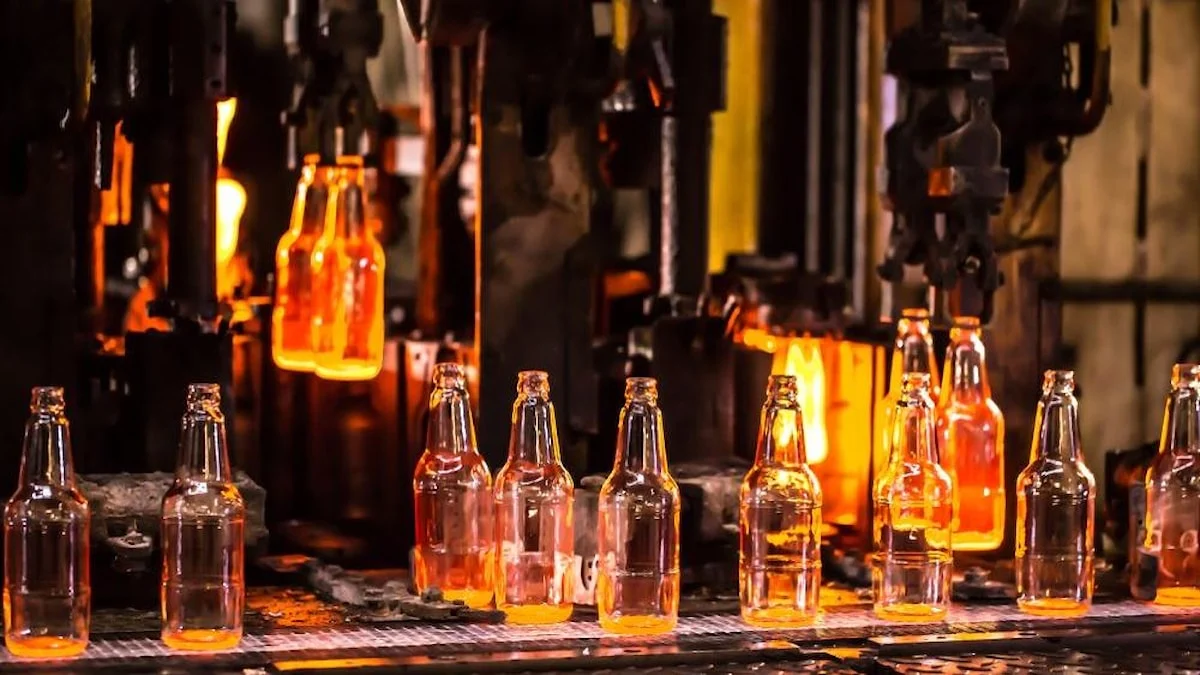
The main material of glass is sand. Sand is one of the most abundant substances in nature. The material made of pure silica glass, obtained only by melting sand, is very fragile. Soda is added to the mixture to both increase the strength and reduce the melting temperature. Minerals such as limestone, dolomite and feldspar are added to eliminate the resistance to water and chemicals. Secondary raw materials in the form of glass cullet are added to this mixture, called blend, and it becomes ready to be melted in the furnace. When blend is melted in the glass furnace at 1500 °C, it turns into soda-lime glass, a fluid liquid with honey consistency in the desired color. Molten glass is cut into drops and turned into bottles, jars, glasses, etc. by automatically pressing and blowing in machines or by blowing twice. It is molded into shape. The resulting glass products are then cooled in a programmed manner, subjected to sensitive quality inspections on the line, and faulty ones are separated. Thus, the production process is completed. If the glass is held by hand, it has a hard and stagnant effect. Because of its fragility, it breaks when hit hard. However, chemists say that "the container from which we drink water is itself a liquid." All these are the main characteristics of cold, stagnant glass. However, when the glass is heated to high temperatures, these properties completely change. First it starts to soften. Then it gains fluency. In fact, if sufficient heat is provided, it flows "like water". Glass is defined as a mineral. But it has a very important change compared to other mines. That is, it is not a "melting point" but a "softening point". Due to this important feature, if the temperature of the environment in which the glass is located is increased, it becomes more and more liquid and fluid. This allows the glass to be shaped and blown using many different methods.
