
 English
 Türkçe

Glass and Porcelain
Glassware Printing
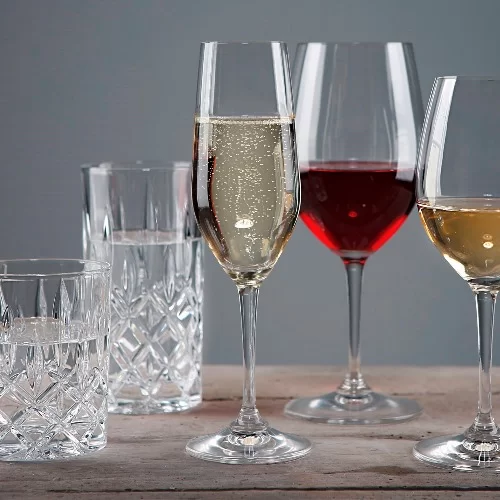
Glass has been a valuable material throughout human history for both its aesthetic and functional aspects. Today, glass products are used not only as kitchen utensils or decorative objects, but also as advertising and promotion tools. In this context, printing on glass cups has become indispensable for both personal use and corporate promotion. Glass cup printing is a creative process that combines visual and functional aesthetics. In this article, we will focus on the materials used especially in glass cup printing. decal print method and 600°C fusing technique will be discussed in detail.
The Importance and Usage Areas of Printing on Glass Cups
Glass cup printing; It offers a wide range of uses, from promotional products to personalized gifts, from restaurant and cafe products to wedding and event souvenirs. Brands can develop an effective promotional strategy by printing their logos or messages on glass cups. People can turn their special days into permanent memories.
Since traditional printing techniques may have limited permanence on glass, special techniques are used for high durability and professional results on such products. At this point decal print and applied thereafter high temperature baking processis among the important elements that guarantee quality and permanence in glass cup printing.
What is Decal Printing?
Decal printing (or “transfer printing”) is a technique that allows specially prepared graphics or patterns to be transferred to the glass surface with the help of a water-based or adhesive film. This method is quite common in ceramic and glass products. Decal actually refers to the transfer of the image on a "carrier" film to the glass surface. The decal used during the printing process is then baked, integrated with the glass and becomes a long-lasting coating.
Stages of Decal Printing
- Chart Preparation
The first step is to prepare the image to be printed digitally. Graphic designers create logos, text or patterns in accordance with customer demands. Color separations and contours suitable for printing are created. - Transfer to Decal Printing Paper
The prepared design is created using special ceramic and glass inks. silk-screen printing or digital edition It is transferred to decal paper using the method. The structure of these inks is formulated to withstand high temperatures. - Cutting Decal and Soaking in Water
The printed decal is cut according to the edges of the pattern. It is then immersed in water for a short time. With this process, the decalin carrier film layer softens and becomes ready to be transferred to the surface. - Application on Glass Cups
The decal dipped in water is carefully placed on the designated area of the glass cup. Air bubbles and excess water are removed with a spatula. At this stage, it is very important that the pattern is placed properly. - Drying Process
In order for the decal to adhere properly to the glass surface, it must be left to dry for a certain period of time. This time may vary depending on environmental conditions, but generally a waiting period of a few hours is sufficient.
600°C Baking Process
The most critical step for the decal placed on the glass to become permanent is baking (baking) operation. In this process, glass glasses are heated to a certain temperature in industrial furnaces.
Firing Process
- Oven Preparation
The furnace is heated before the process and allowed to reach a constant temperature. In order for decal inks to fully integrate with the glass, 550–600°C A temperature between is preferred. - Placing Glass Cups
The glasses are placed on the oven shelves so that they do not touch each other. In case of contact, deterioration or cracking of the patterns may occur. - Firing Time
Glass glasses are generally 10-15 minutes It is kept between . During this time, the ink penetrates the glass surface and becomes permanent. - Cooling Process
Glass glasses are not taken outdoors immediately after firing. They are allowed to cool slowly in the oven. This stage is very important as sudden temperature changes may cause cracks in the glass.
Durability After Firing
Prints as a result of the firing process:
- It becomes dishwasher safe.
- Güneş is resistant to light and liquids.
- It does not rub off or corrode easily from the surface.
These features are indispensable, especially for glass cups used in restaurants, cafes and promotional purposes.
Advantages of Decal Printing
Decal printing offers many advantages for glass surfaces:
- High Resolution Images
Complex graphics, thin lines and multi-colored designs can be implemented successfully. - Permanence and Durability
600°C Thanks to baking, the printing life becomes equivalent to the life of the glass cup. - Suitability for Commercial Use
Suitability for food contact ensures health safety. - Applicability to Various Surfaces
Decal printing can be applied not only to glass cups, but also to many glass and ceramic products such as plates, bowls and vases.
Technical and Commercial Recommendations for Glassware Printing Companies
1. Equipment Quality
The quality of the equipment as well as the material used plays a determining role in printing quality. Professional screen printing machines, cutting apparatus, ovens and quality control systems are necessary for the standardization of production.
2. Ink and Material Selection
The inks used must be able to react and integrate with the glass surface. Certified inks suitable for food contact should be preferred.
3. Product Personalization
Personalized printing options can be offered to increase customer satisfaction. For example; The product can be customized with information such as name, date, company logo.
4. Mass Production and Promotion
By making mass production specifically for companies, a significant customer base can be reached, especially in areas such as fairs, events and corporate gifts.
5. Quality Control
Detailed control of each printing product should be ensured, and damaged, broken or defective prints should not be offered for sale. Color saturation and adhesion control are especially important after baking.
Sustainability and Environmental Impact
Glass glasses are environmentally friendly because they are made of glass, which is one of the least harmful materials to nature. Decal printing and baking processes also provide a sustainable production model when done correctly. Using water-based inks and choosing energy-efficient ovens reduces the environmental impact.
Additionally, people choosing long-lasting glass cups instead of disposable products with personalized prints prevents waste.
Result
Glass cup printingis an important sector that gains artistic and commercial value with technological developments. used in this field decal printing method and 600°C firing techniquehas become a standard in the industry in terms of both aesthetics and durability. Every business that wants to produce high-quality products must apply these techniques professionally.
Investing in quality in glass cup printing increases customer satisfaction and has a positive impact on the brand's reputation. Today, individuals and institutions buy not just a glass, but also a story, a message, a souvenir or a brand identity. Therefore, glass cup printing is not only a production but also an art of communication.
If you wish, I can shorten this article to a format suitable for a blog post or promotional content, or enrich its sections with visuals. Do you want me to help?
